Introduction
Tuberculosis (TB) remains one of the world’s most serious infectious diseases, especially in developing countries. Children, particularly newborns and infants, are at higher risk of developing severe and life-threatening forms of TB. The BCG vaccine (Bacillus Calmette–Guérin) plays a vital role in protecting babies from these dangerous infections. It is one of the oldest and most widely used vaccines in the world and is an essential part of childhood immunization programs, including India’s Universal Immunization Programme (UIP).
The BCG vaccine is given at birth to provide early protection against tuberculosis, particularly TB meningitis and miliary TB, which can cause severe disability or death in young children. This article explains everything parents, caregivers, and health workers need to know about the BCG vaccine, including its benefits, schedule, safety, and importance in preventing tuberculosis in children.
What is the BCG Vaccine?
BCG stands for Bacillus Calmette–Guérin, named after the scientists Albert Calmette and Camille Guérin who developed the vaccine. It is made from a weakened strain of bacteria related to the one that causes TB. This weakened form helps the body build immunity without causing the disease.

The BCG vaccine is primarily designed to protect children from severe forms of tuberculosis. While it may not completely prevent TB infection in all cases, it significantly reduces the risk of serious complications, especially in early childhood.
Why is the BCG Vaccine Important for Children?
Tuberculosis is a contagious disease that mainly affects the lungs but can spread to the brain, bones, and other parts of the body. In children, TB can become very severe and life-threatening if not prevented or treated early.
The BCG vaccine helps protect against:
- TB meningitis (infection of the brain)
- Miliary TB (TB spread throughout the body)
- Severe pulmonary TB in young children
These conditions can lead to long-term disability or even death. Vaccinating babies at birth ensures they develop protection at the earliest stage of life when they are most vulnerable.
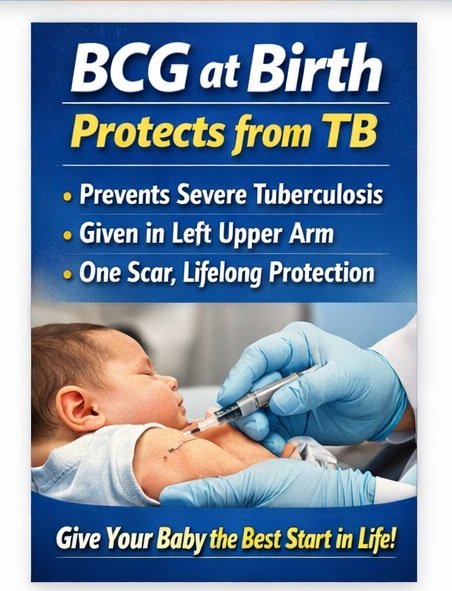
Tuberculosis Risk in Infants and Children
Infants have weaker immune systems compared to adults, making them more susceptible to infections. If a child is exposed to a person with TB, the chances of developing severe disease are much higher.
Without vaccination, young children can develop:
- Brain infections leading to seizures
- Lung damage
- Growth problems
- Developmental delays
- Serious illness requiring hospitalization
BCG vaccination greatly reduces these risks and is therefore considered one of the most important birth vaccines.
When is the BCG Vaccine Given?
The BCG vaccine is usually given:
- At birth or within the first few days of life
- As early as possible if missed at birth
- Up to one year of age if the child was not vaccinated earlier
Giving the vaccine at birth ensures immediate protection when exposure risk is highest and immunity is still developing.
In India, BCG is part of routine immunization services and is available free of cost at:
- Government hospitals
- Primary Health Centers (PHCs)
- Community Health Centers (CHCs)
- Immunization outreach sessions
Dose, Route, and Site of Administration
The BCG vaccine is given as a single dose in a specific way to ensure it works effectively.
Dose:
- 0.05 ml for newborns
- 0.1 ml for older infants
Route:
- Intradermal (just under the skin)
Site:
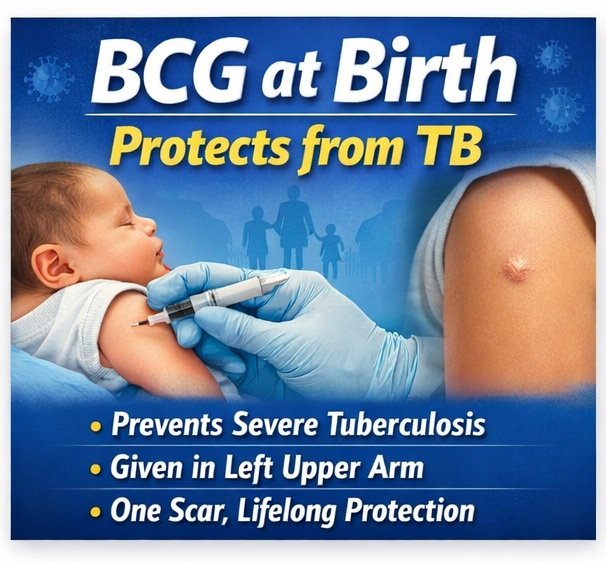
- Left upper arm
It is given only once in a lifetime. There is no booster dose required.
What Happens After BCG Vaccination?
After receiving the BCG vaccine, it is normal to see changes at the injection site. Parents should know that these reactions are expected and are part of the body’s natural response.
Typical reaction timeline:
- 2–3 weeks: A small swelling appears
- 4–6 weeks: The swelling may turn into a small sore or ulcer
- 6–12 weeks: The sore dries and heals
- Later: A small permanent scar remains
The scar is a sign that the vaccine has worked and immunity has developed.
Is the BCG Vaccine Safe?
Yes, the BCG vaccine is very safe and has been used for over 100 years worldwide. Millions of babies receive this vaccine every year without serious problems.
Common and normal side effects include:
- Mild swelling at injection site
- Redness or small lump
- Small ulcer formation
- Permanent scar
These reactions do not require treatment and heal on their own.
Rare side effects may include:
- Swollen lymph nodes near the injection site
- Large ulcer (very uncommon)
If there is unusual swelling, pus, or fever lasting several days, parents should consult a doctor.
How Effective is the BCG Vaccine?
The BCG vaccine is highly effective in preventing severe forms of tuberculosis in children. It offers strong protection against TB meningitis and miliary TB, which are the most dangerous forms affecting infants.
Although it may not fully prevent lung TB in adults, its role in protecting children from life-threatening TB complications is extremely important. Countries with higher TB rates strongly recommend BCG vaccination at birth for this reason.
Why BCG Should Be Given at Birth
Early vaccination is crucial because:
- Newborns are more vulnerable to infections
- TB exposure can occur early in life
- Early protection prevents serious illness
- Immunity develops before possible exposure
Delaying vaccination increases the risk of TB infection during infancy. Giving BCG at birth ensures timely protection and better health outcomes.
BCG Vaccine Under India’s Universal Immunization Programme (UIP)
In India, the government provides BCG vaccination free of cost as part of the Universal Immunization Programme. This initiative aims to protect all children from vaccine-preventable diseases.
Key benefits of UIP:
- Free vaccination services
- Available in both rural and urban areas
- Regular immunization sessions
- Tracking through digital platforms like U-WIN
Parents are encouraged to ensure their newborns receive all vaccines on time, starting with BCG at birth.
Myths and Facts About BCG Vaccine
Myth: The scar after BCG means infection.
Fact: The scar is normal and shows the vaccine worked.
Myth: BCG is not needed if no TB patient is at home.
Fact: TB can spread unknowingly in the community. Protection is necessary for all children.
Myth: If swelling appears, the vaccine caused disease.
Fact: Mild swelling is a normal immune response.
Myth: BCG can be skipped.
Fact: It is essential for preventing severe TB in childhood.
Who Should Not Receive BCG?
In rare cases, BCG may not be recommended for:
- Babies with severe immune system disorders
- Children with certain serious medical conditions
- Infants undergoing specific medical treatments
In such situations, doctors will guide parents based on medical evaluation.
Role of Parents in TB Prevention
Parents play a key role in protecting children from TB:
- Ensure BCG vaccination at birth
- Follow the full immunization schedule
- Maintain good nutrition for strong immunity
- Seek medical care if a family member has TB
- Keep living spaces clean and well ventilated
Early prevention is always better than treatment.
Importance of BCG in Public Health
The BCG vaccine has played a major role in reducing childhood deaths due to tuberculosis worldwide. It remains a cornerstone of public health strategies in countries where TB is still common.
By vaccinating newborns:
- Severe TB cases in children are reduced
- Hospital admissions decrease
- Long-term complications are prevented
- Childhood survival rates improve
This makes BCG one of the most valuable and cost-effective vaccines in the world.
Conclusion
The BCG vaccine is a simple, safe, and powerful tool in protecting children from severe tuberculosis. Given at birth, it helps build early immunity and reduces the risk of life-threatening TB complications such as TB meningitis and miliary TB.
Every parent should ensure their newborn receives the BCG vaccine on time. It is a single-dose vaccine, free under government programs, and provides long-term protection during the most vulnerable years of life.
In countries like India, where tuberculosis continues to be a public health concern, timely BCG vaccination is not just important — it is essential. Protecting a child from TB starts with a single step taken at birth.
Ensuring universal BCG vaccination helps create healthier communities, stronger children, and a future free from severe childhood tuberculosis.